Shafts & Axles
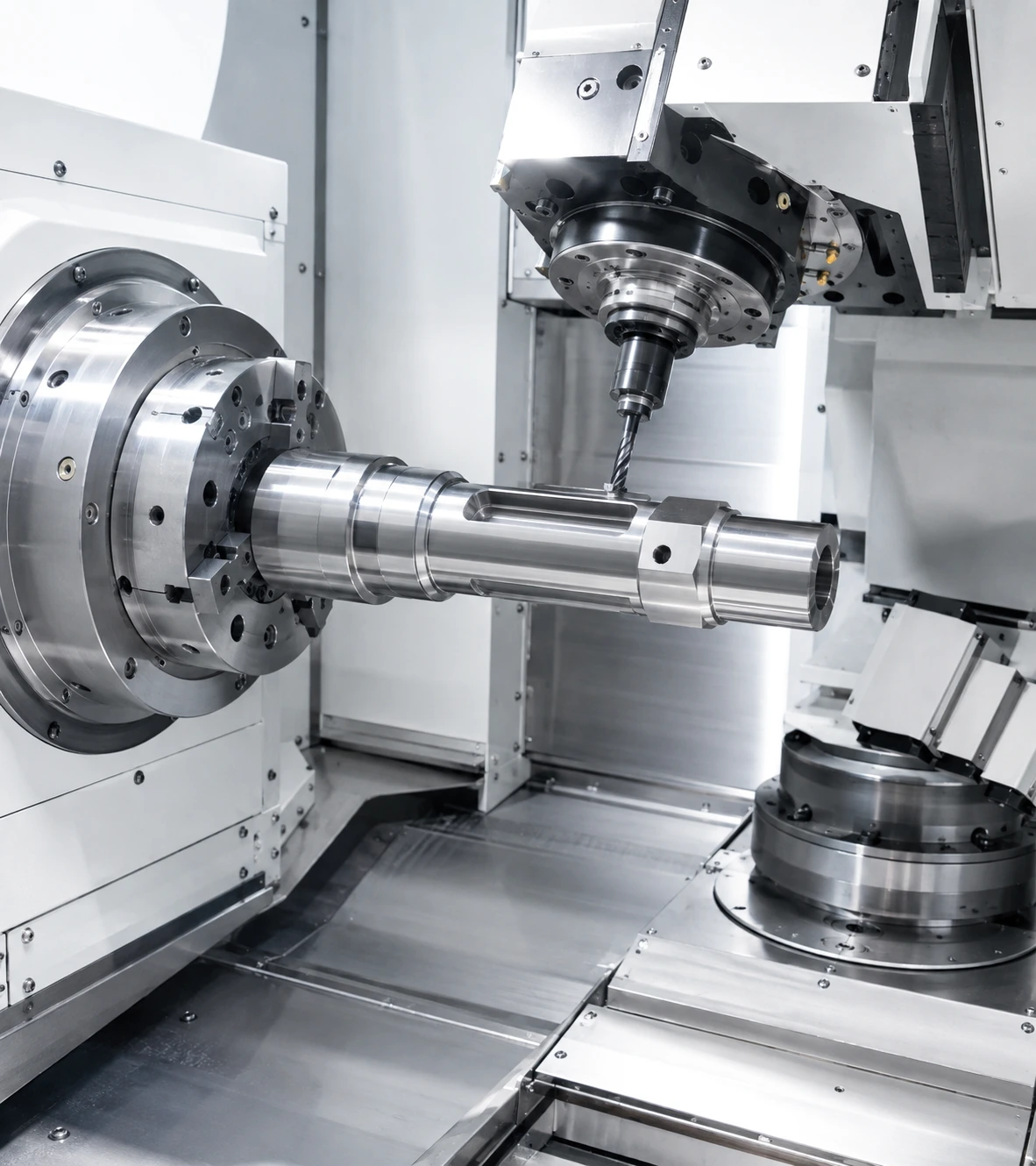
Stepped and profiled shafts with seating surfaces, threads, keyways, flats, cross holes and milled features.

We manufacture parts that combine turned surfaces with flats, slots, holes and milled features. CNC turn-mill machining is performed from drawings, 3D models or sample parts, from one-off components to production runs.

CNC turn-mill machining is used for parts where cylindrical, conical or face-turned surfaces must be combined with flats, slots, holes, threads and other milled features.
Stepped and profiled shafts with seating surfaces, threads, keyways, flats, cross holes and milled features.
Parts with internal and external turned surfaces, grooves, holes, pockets and positioning or fastening features.
Flanged and transition parts with fits, threads, bolt-circle holes, faces, flats and other combined geometry.
Nipples, fittings, adapters and other components with threaded, axial, radial and milled features.
Rotational parts with grooves, seating surfaces, holes, keyways and additional milled features.
One-off and batch parts with complex combined geometry from drawings, 3D models, sketches or samples, subject to engineering review.
We perform OD and ID turning, boring, drilling, threading, slots, flats, faces and local contours. Operations and equipment are selected based on part geometry, tolerances and batch size.
OD and ID turning, facing and boring of cylindrical and conical surfaces
Grooves, shoulders, chamfers, seating surfaces and profiled transitions
Drilling, countersinking, reaming and machining of axial, radial and process holes
External and internal threading to technical documentation
Milling of flats, faces, keyways, grooves, pockets and local contours
Machining of off-axis features and related turned and milled surfaces
In-process and final inspection of critical dimensions, fits and feature relationships
If a part includes not only rotational surfaces but also slots, flats, cross holes, faces or off-axis features, turning alone is not enough. Combining operations reduces the number of setups and helps maintain more accurate relationships between features.
Some parts are machined on HAAS ST-15Y or HAAS ST-10Y machines with Y-axis and live tooling. For more complex geometry, we combine turning with multi-axis milling.
Material grade, condition and stock form are confirmed after reviewing part geometry, tolerances, cutting requirements and finished-part specifications.
Send the source data to our engineer. We will determine which turning and milling operations are required, review the workholding strategy and select the most suitable process for your batch.
Our equipment allows us to combine turning and milling based on part geometry, size and accuracy requirements. Y-axis turning centers with live tooling support turning, drilling, threading and milling without transferring the part to a separate milling machine.
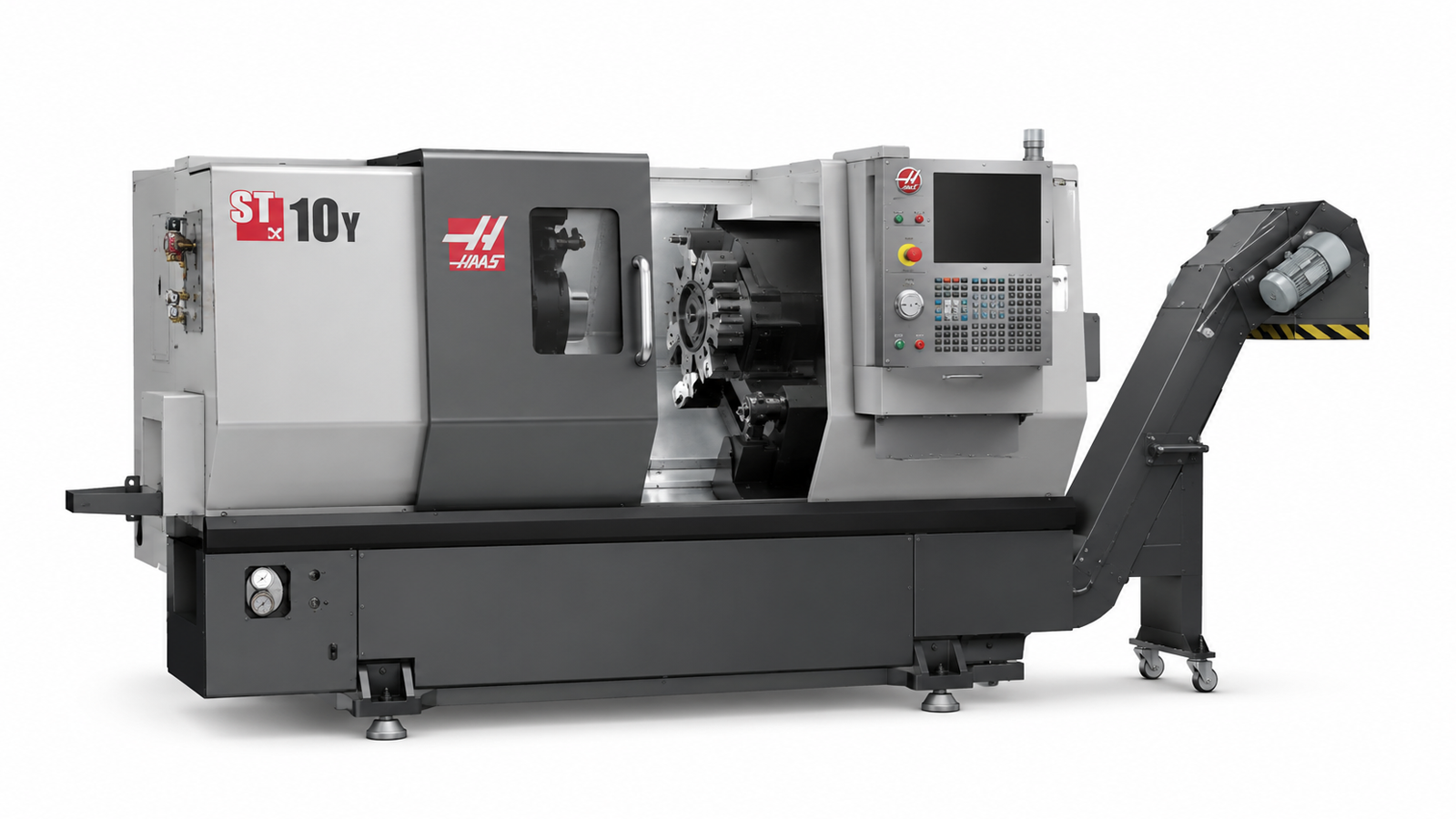
Y-axis CNC turning center with live tooling and controlled C-axis for complete machining in one setup: turning, milling, drilling and off-axis hole machining.
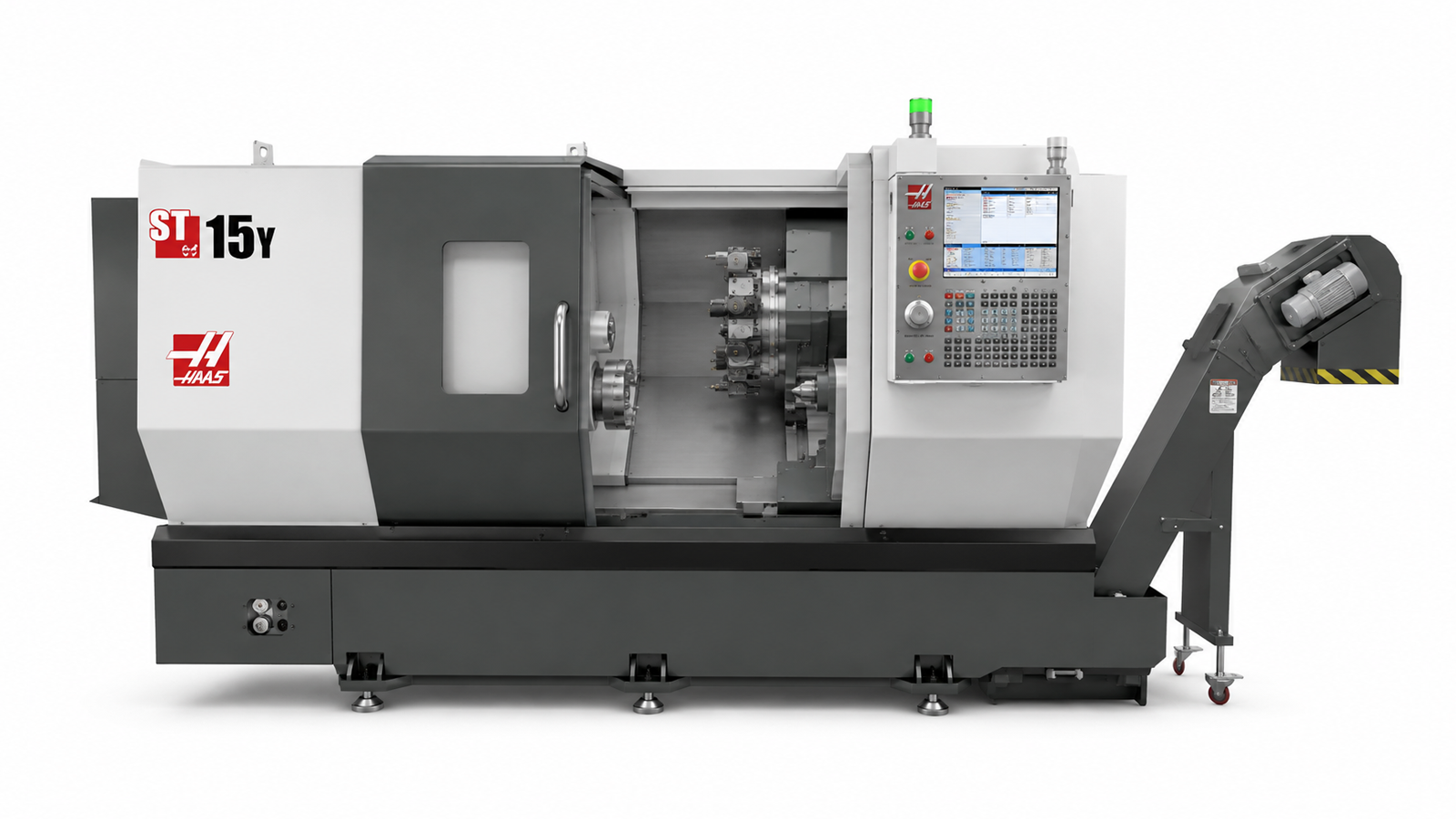
Y-axis CNC turning center with live tooling and controlled C-axis for complete machining in one setup. Supports turning, drilling, milling and machining of features offset from the rotational axis.
Combined machining is used where one component integrates rotational surfaces, fits, holes, slots, faces and other features with precise positional relationships.
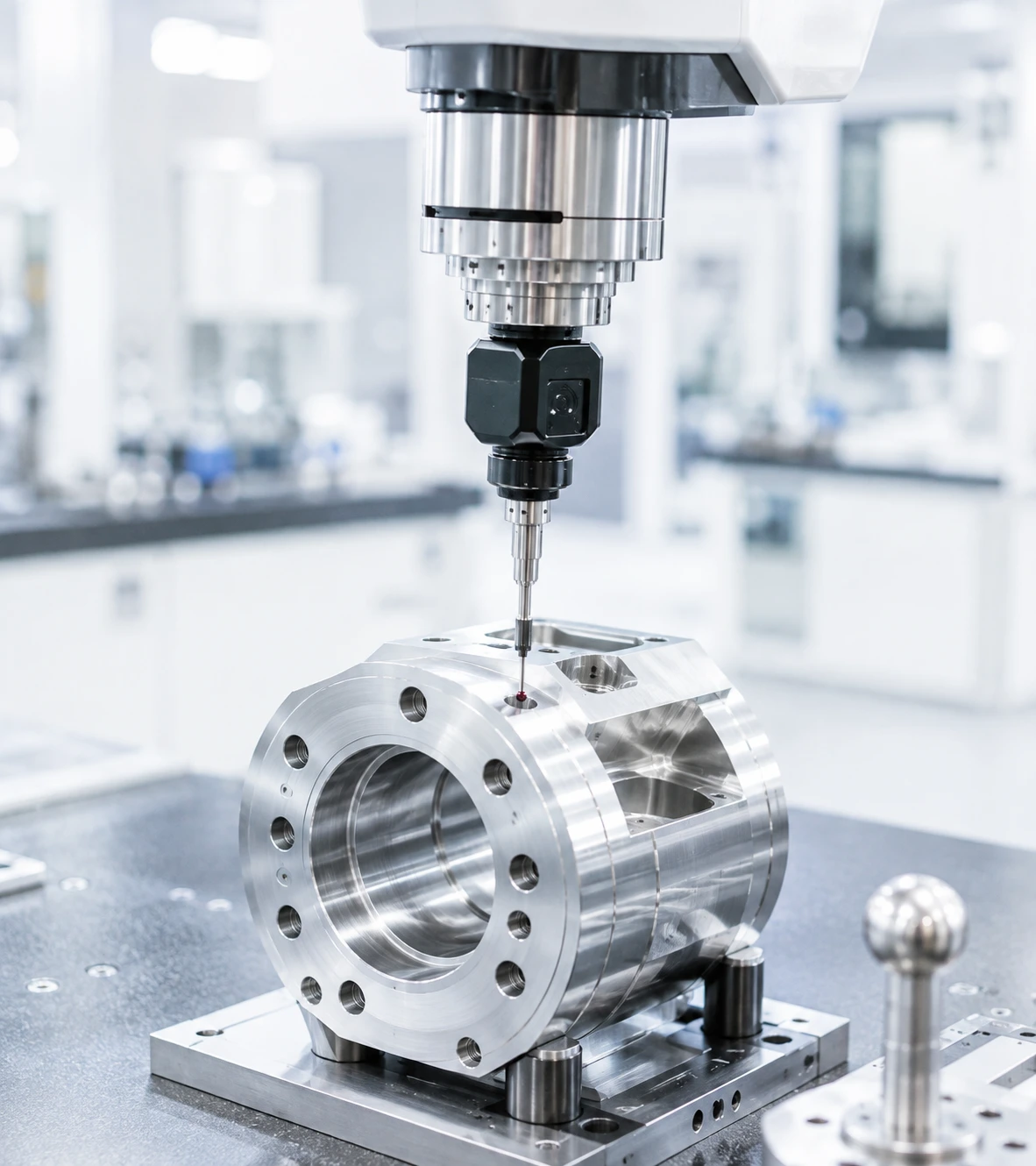
Before machining, we review technical requirements and the workholding strategy. During production, we verify parameters that affect subsequent operations, then inspect finished parts before release.
We review geometry, material, datums, tolerances, fits, surface finish and positional relationships between turned and milled surfaces.
For production runs, we inspect critical parameters on the first part before continuing the batch when required by the process.
We verify dimensions and datum surfaces after operations where deviation could affect subsequent turning or milling.
We verify the agreed parameters of finished parts before packing, handover or delivery.
Before production, we confirm material, quantity, tolerances, operation sequence, inspection requirements, price and lead time.
Send a drawing, 3D model, sketch, photo with dimensions or a physical sample of the part.
Our engineer defines the optimal process, workholding strategy, required machines, tooling and fixtures.
We confirm material, process, quantity, price, inspection criteria and lead time.
We perform the agreed turning and milling operations and inspect critical parameters.
We pack the finished parts and arrange pickup or delivery.
Pricing considers more than part size and material. We account for the number of turning and milling operations, whether they can be completed in one setup, required tooling and fixtures, and batch size.
Our engineer reviews the drawing or 3D model and defines the operation sequence, workholding, equipment and inspection plan. We then confirm price and lead time.
We will review turn-mill manufacturability, define the required operations and confirm material, quantity, tolerances, lead time and other technical requirements.