Heavy Construction and Engineering Equipment
Truck cranes, graders, bulldozers, drilling rigs and other heavy machinery with mechanical and hydraulic drives.

We provide inspection, condition assessment, repair and overhaul of heavy and special-purpose equipment, as well as individual components and assemblies. We restore mechanical and hydraulic systems, frames and structural components. When a replacement part is unavailable, we can manufacture a new component from a drawing, 3D model or physical sample using our in-house machining capabilities.
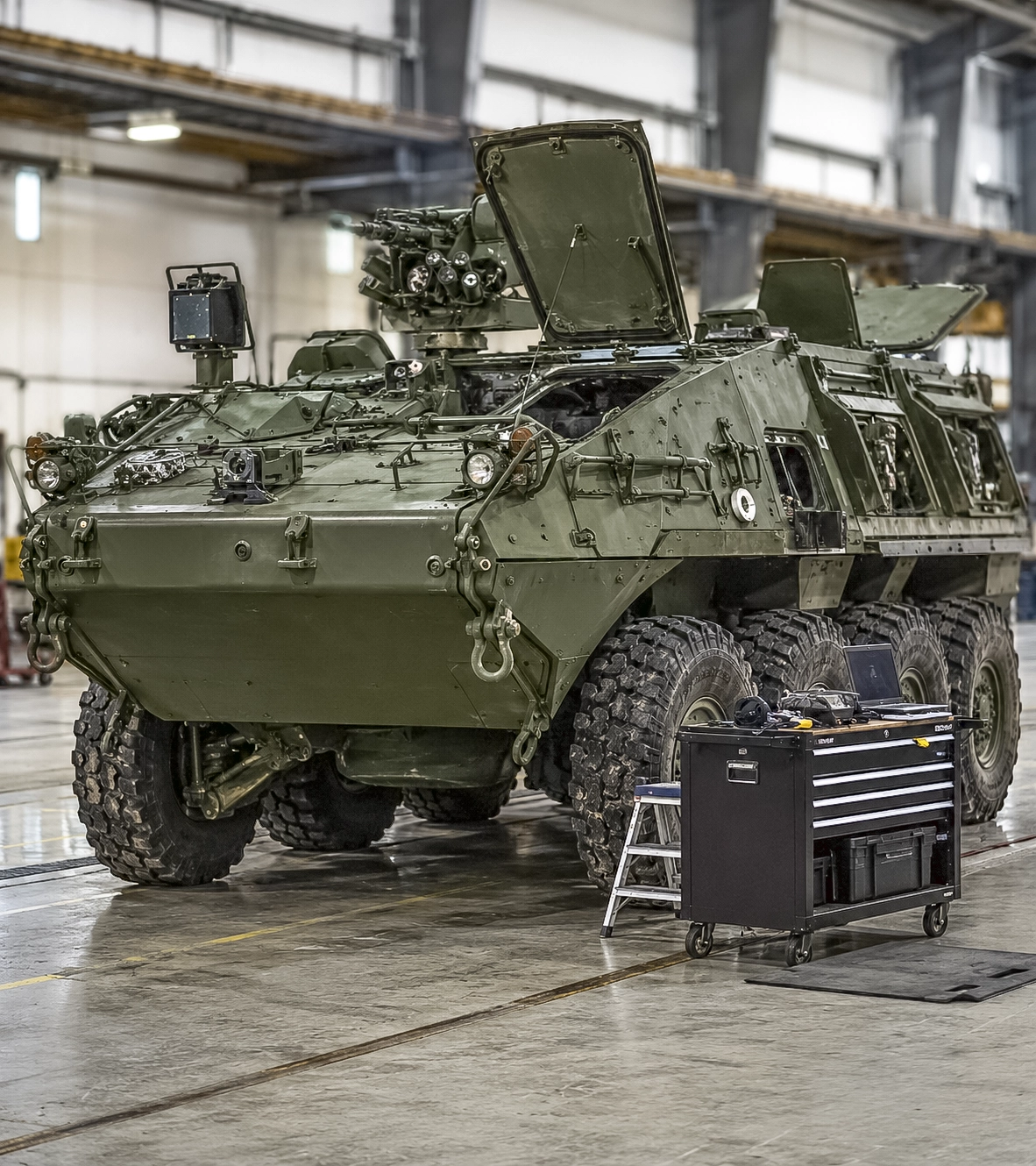
Our primary focus is equipment operating under high mechanical and hydraulic loads. We can assess complete machines or individual components for repair. We do not service passenger cars, ATVs, buggies, motorcycles or other light vehicles.
Truck cranes, graders, bulldozers, drilling rigs and other heavy machinery with mechanical and hydraulic drives.
Equipment for earthmoving, construction, road and installation work, including working assemblies and attachments.
Heavy recovery vehicles, service units, mobile workshops and special-purpose support vehicles.
Municipal and industrial equipment, mixing systems, rotary units and other special-purpose machinery and mechanisms.
Load platforms, heavy special-purpose chassis, frame structures and mechanisms requiring comprehensive reconditioning.
Hydraulic cylinders, gearboxes, shafts, housings, hydraulic pumps, hydraulic motors and other removed assemblies without sending the complete machine.
We do not reduce repair to simply replacing a part. We first identify the nature and likely cause of failure and the extent of wear, then define the repair route: restore a surface, manufacture a new part, repair the hydraulic system, reinforce a structure or combine several operations.
Inspection & condition assessment: inspection, geometry measurements, wear assessment and instrument-based testing of assemblies.
Mechanical systems: frames, housings, shaft assemblies, axles, bushings, mating surfaces and fits.
Hydraulics: repair of hydraulic cylinders, pumps, hydraulic motors and valves, plus restoration or manufacture of cylinder rods and barrels.
Reconditioning & machining: Boring, weld build-up followed by machining, CNC turning, up to 5-axis CNC milling, cylindrical and surface grinding, and EDM.
Welding & structural repair: repair of frames and structural assemblies, reinforcement of damaged components, fitting and assembly work.
Custom part manufacturing: new shafts, rods, bushings, eccentrics, splined and other parts from drawings or physical samples.
We focus on cases where standard component replacement is expensive, has a long lead time or is simply unavailable. In these situations, restoring geometry or manufacturing a new component can be integrated into a single repair process.
Send photos of the assembly, nameplate or damaged part. An engineer will determine what information is required for inspection, reconditioning or manufacture of a replacement component.
A worn component does not always need complete replacement. We first assess its actual geometry, damage, mating surfaces and whether the assembly can be returned to the required operating parameters. If reconditioning is impractical or the replacement part is unavailable, we can manufacture a new part from a drawing or sample.
This approach is especially useful for older, rare or imported heavy equipment when the original component is obsolete, has a long lead time or is too badly worn for reliable reconditioning.
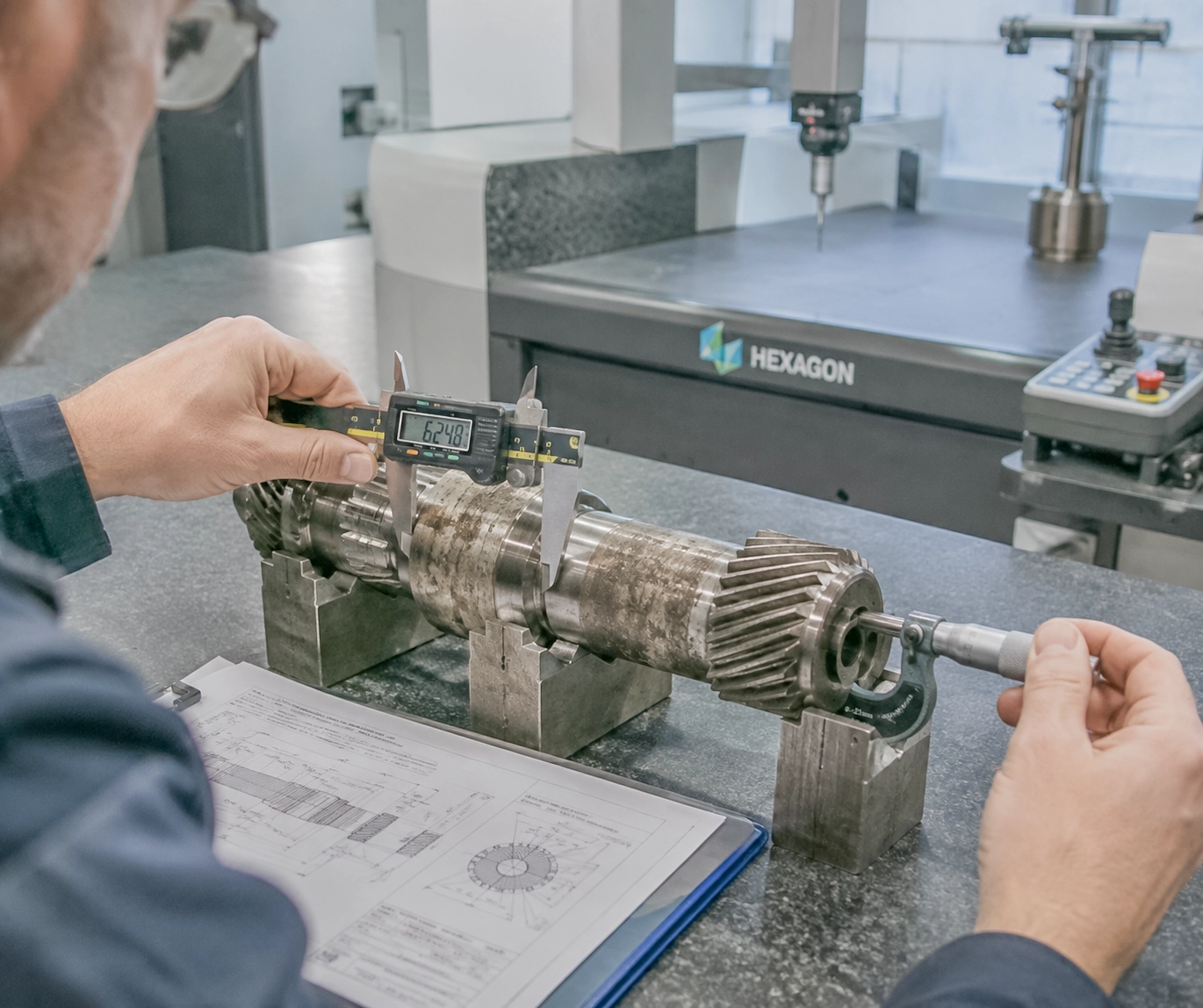
When a repair requires more than replacing a component, such as restoring a fit, manufacturing a shaft, machining a rod, repairing a frame or overhauling a hydraulic assembly, the required operations can be coordinated within a single controlled repair and manufacturing workflow.
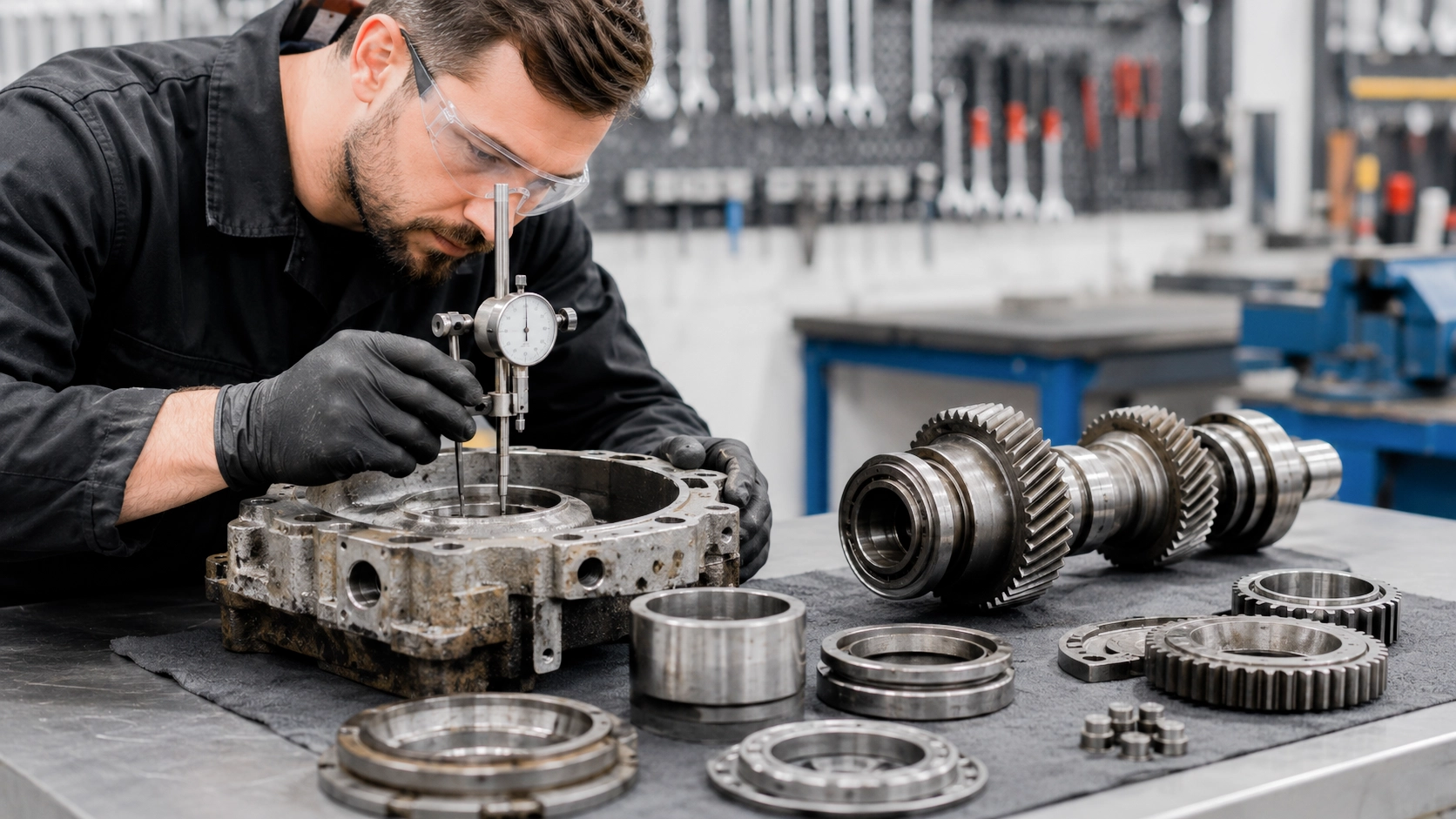
We identify worn and damaged components and check geometry, fits and adjacent assemblies that may have contributed to the failure.
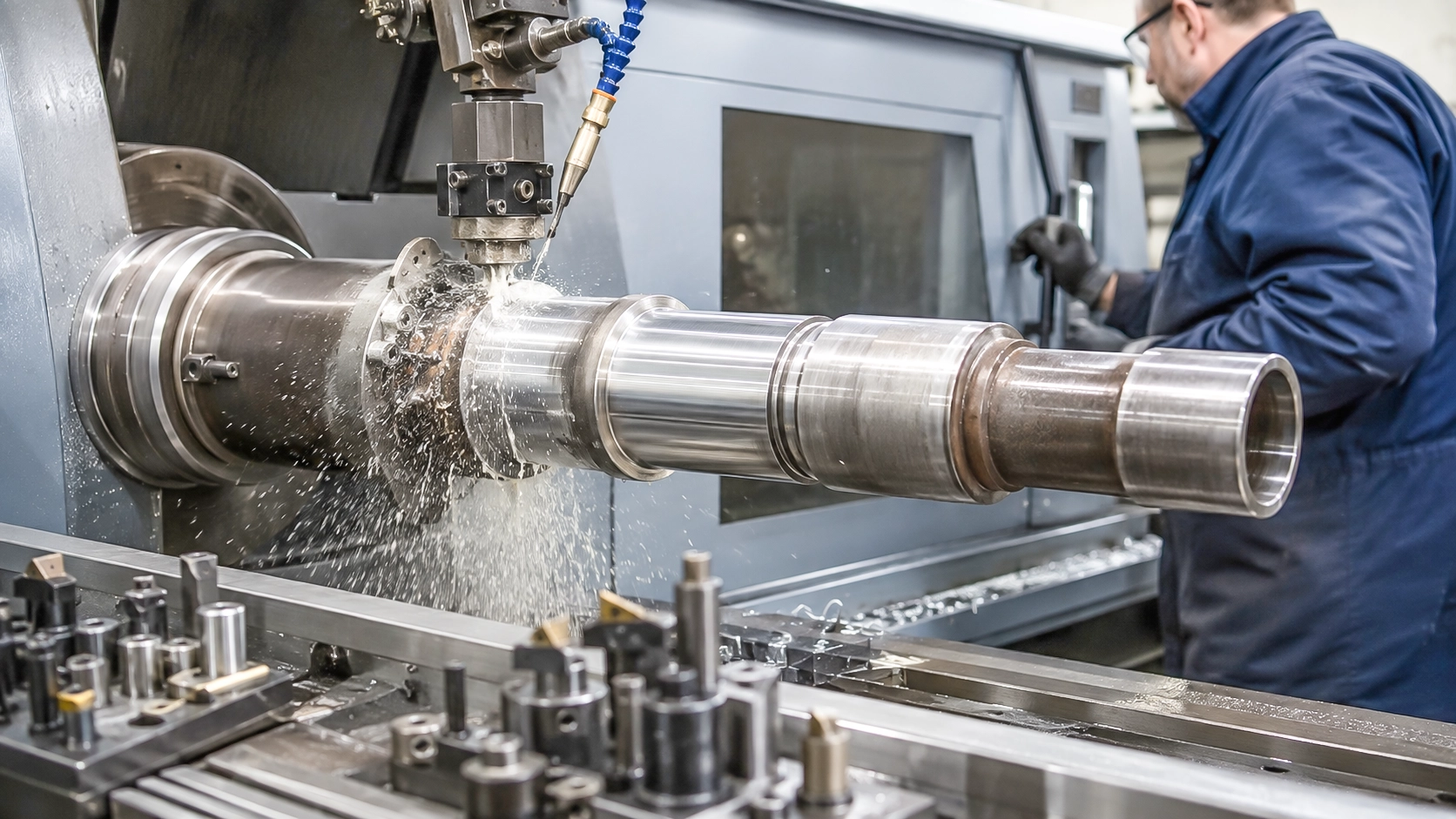
We turn, mill, bore and grind, restore mating surfaces or manufacture a new component from a drawing or sample.
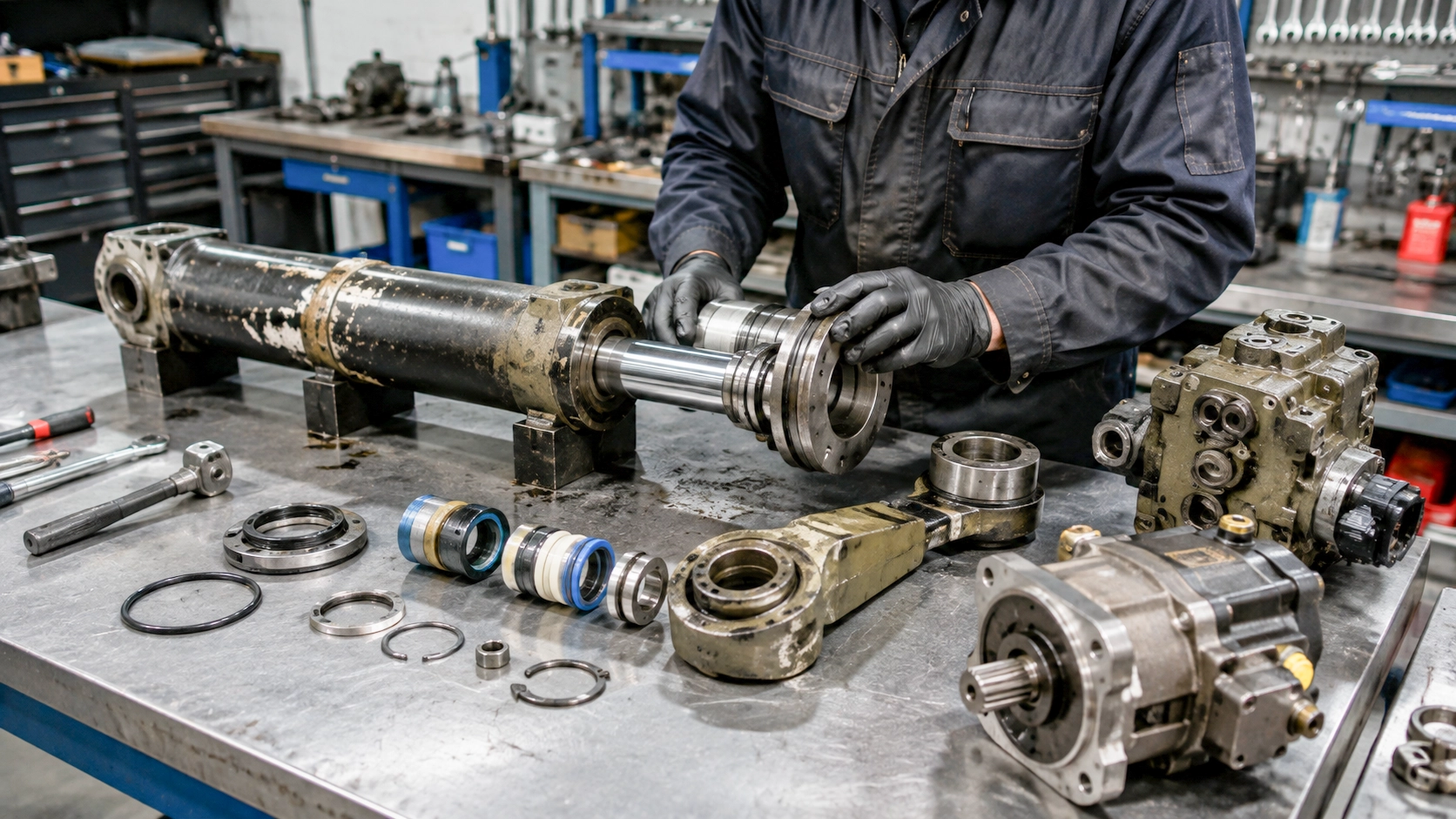
We repair cylinders, pumps, hydraulic motors and valves, and restore frames, housings, brackets and worn bores.
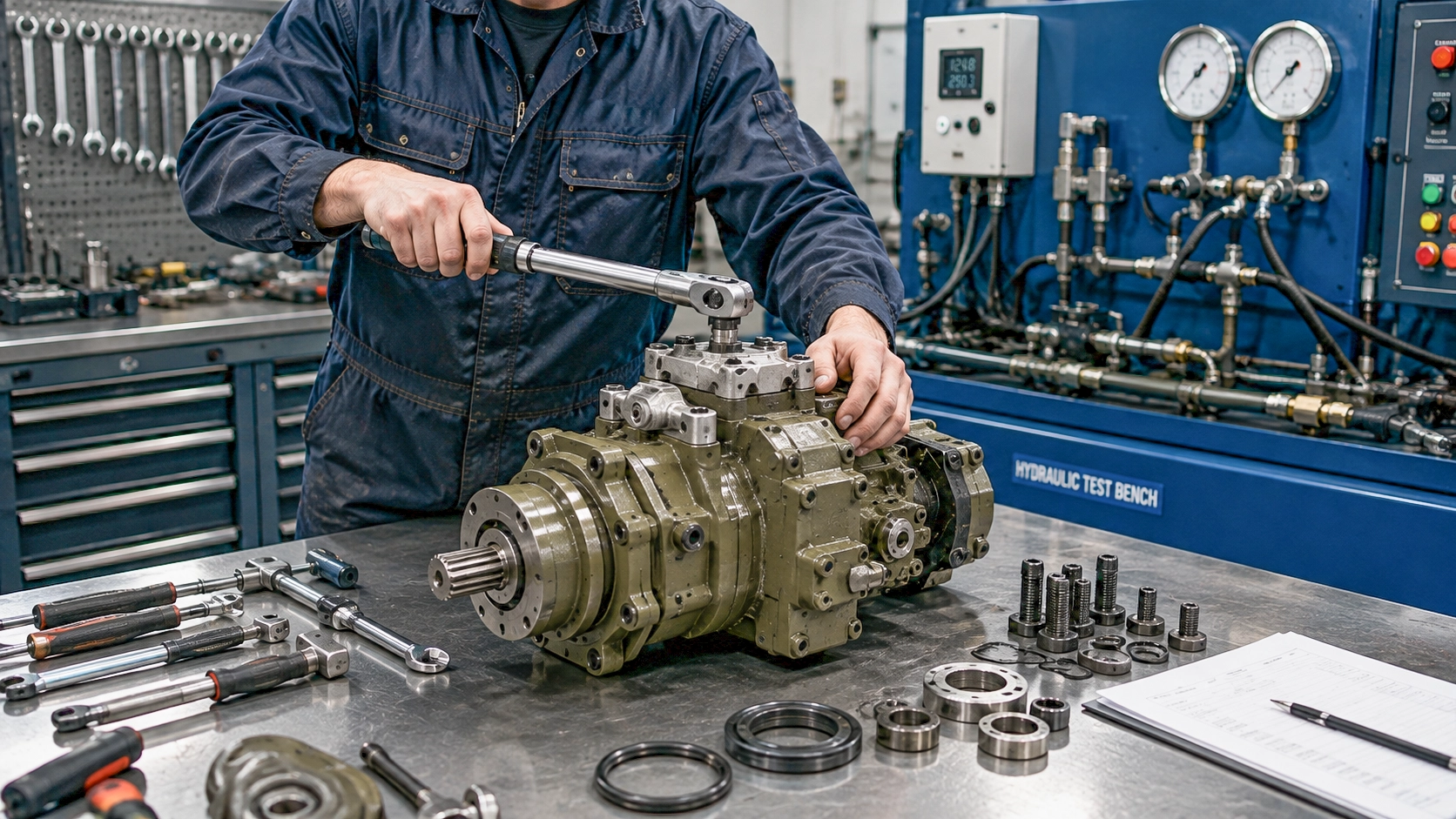
We assemble the unit, inspect connections and moving interfaces, check for leaks and verify compliance with the agreed technical requirements before handover.
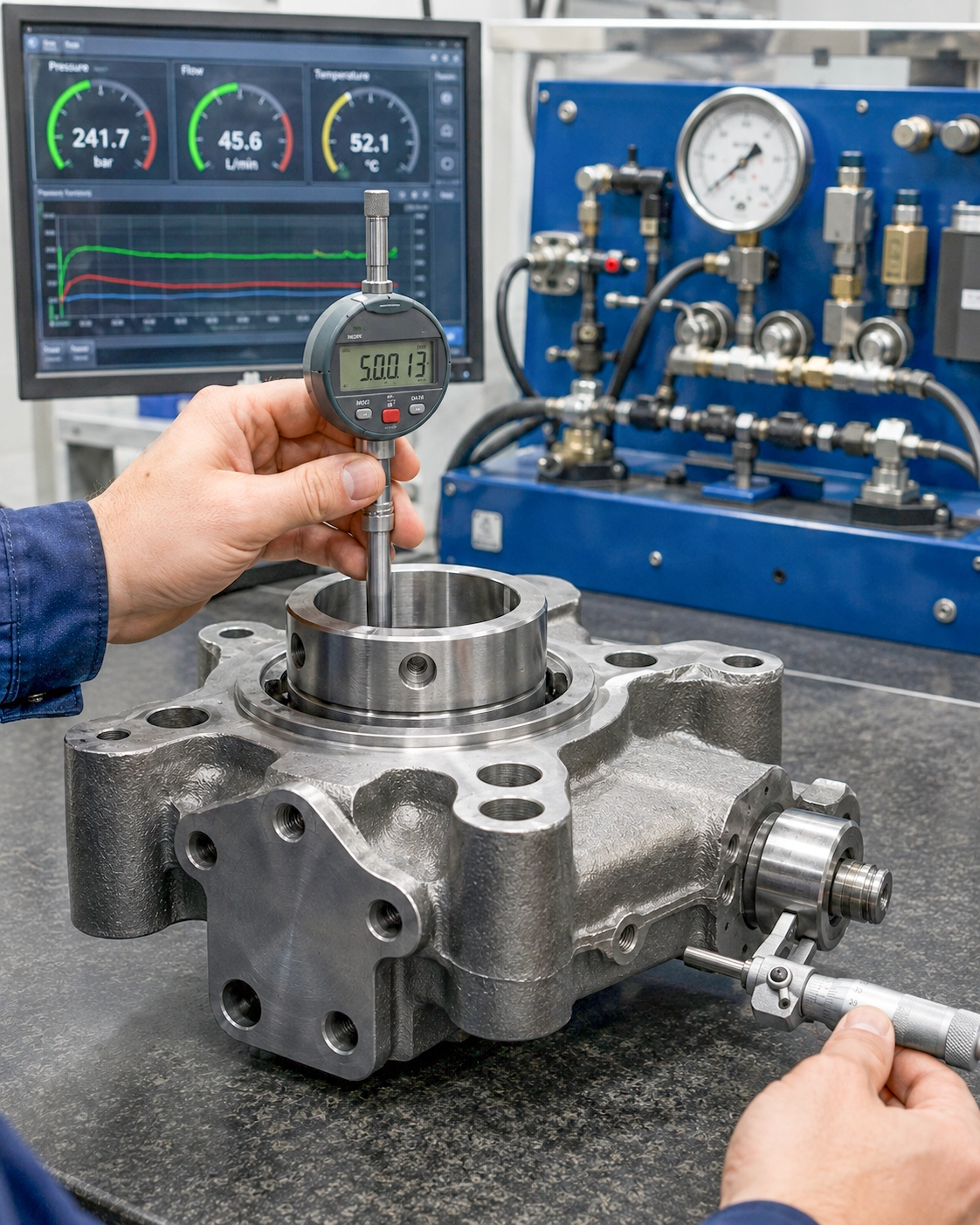
The inspection scope depends on the repair. For mechanical parts we verify geometry and fits; for hydraulics, leak-tightness and operation under pressure.
We verify restored diameters, concentricity, mating surfaces, bores and other critical dimensions.
We pressure-test assemblies and verify leak-tightness and operating parameters of hydraulic cylinders and other hydraulic components.
We check assembly, fasteners, moving interfaces, bearing units and compatibility of reconditioned parts.
These are typical engineering tasks where a single repair combines inspection, machining, welding, heat treatment, hydraulic work and assembly.
We receive the fault description, photos, machine information, drawings or a sample. If required, we arrange delivery of the machine or component/assembly.
We inspect and disassemble as needed, measure wear, determine the nature and likely cause of failure and assess adjacent components.
We define what will be reconditioned, what must be manufactured and which operations are required, then agree the scope and cost.
We perform machining, welding, hydraulic repair, part manufacturing, heat treatment and assembly work according to the agreed repair plan.
We verify restored parameters, leak-tightness and completeness, then hand over the assembly or arrange equipment transport.
The same visible fault can have different causes and require very different repair scopes. A reliable estimate is therefore prepared after assessing the machine or assembly, measuring wear and identifying which parts can be reconditioned, must be replaced or need to be manufactured.
Equipment or assembly type, fault symptoms, overview and damage photos, a nameplate photo, plus a drawing or sample if available. A final estimate may require physical inspection and teardown.
Send photos of the equipment, nameplate and damaged component or assembly, together with available drawings, 3D models or other technical documentation. Based on the information provided, we will determine the required inspection scope and prepare a preliminary repair estimate.